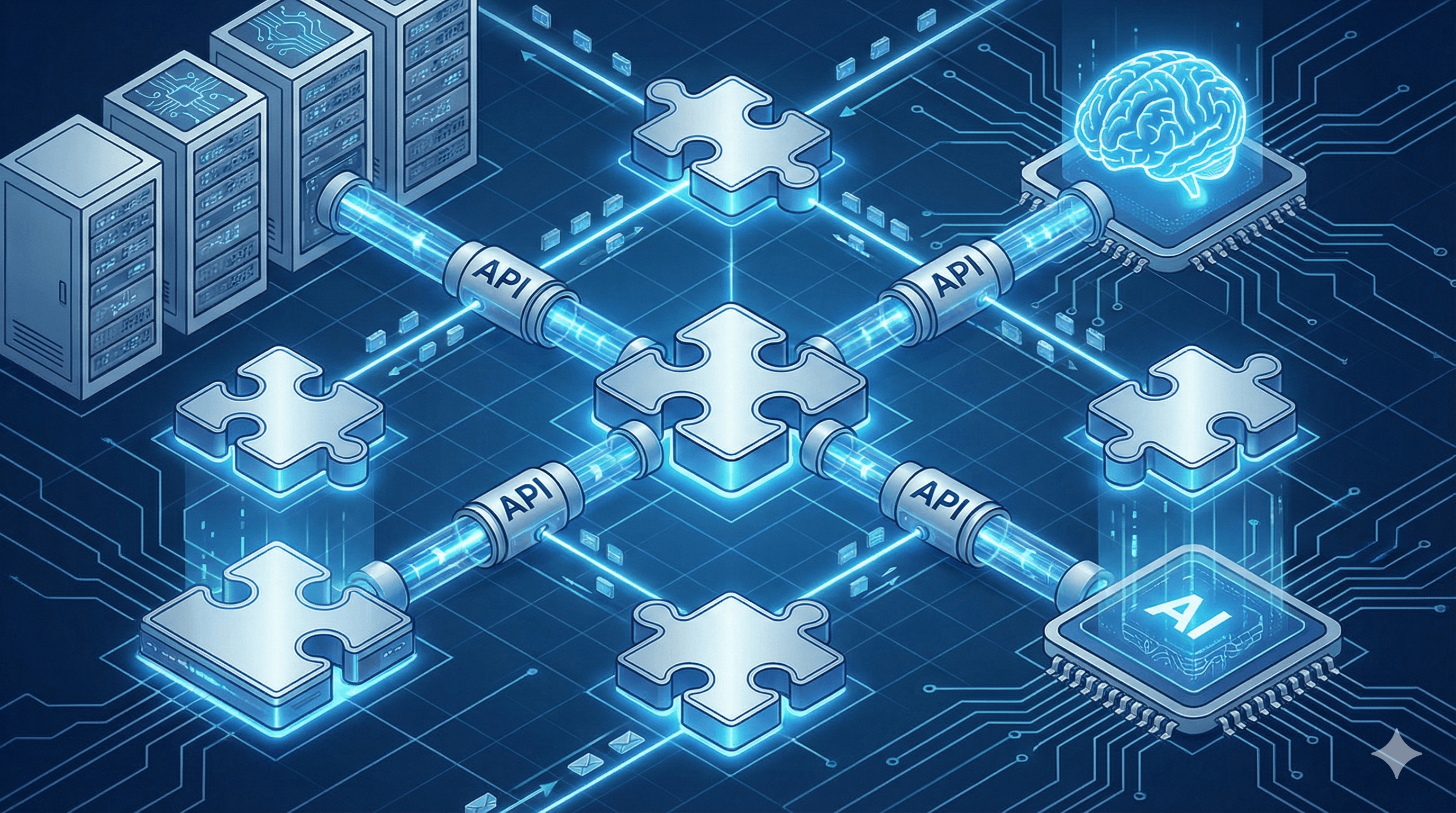
Integrating AI With Your CTRM: A Non-Disruptive Approach
Mercora Team
"Our CTRM and ops processes are so confusing that even the most knowledgeable person in operations doesn't understand everything."
This quote, from a recent conversation with a trading operations manager, captures the integration challenge perfectly. Every commodity trading company has accumulated a unique combination of systems, customizations, workarounds, and institutional knowledge. Adding new technology means navigating this complexity—without breaking what already works.
The Reality of Trading Operations Systems
Most trading houses don't run on clean, unified platforms. They run on ecosystems.
Multiple ERPs arrive through acquisitions and different business lines. CTRMs get heavily customized with workflows, fields, and reports built specifically for each company's operations—modifications that are load-bearing and can't be removed without breaking processes. Legacy integrations connect systems through APIs, file transfers, and sometimes manual processes, often built by people who've since left the company. And critical operations frequently depend on spreadsheets, email folders, and personal databases that aren't officially sanctioned but are genuinely essential.
Into this environment comes a vendor saying "integrate our AI." Operations teams are right to be cautious.
Why Previous Integration Attempts Failed
The pattern is familiar. "Replace everything" is usually a non-starter—switching costs are enormous, risks are high, and existing systems actually work. "Deep integration required" means API development, custom connectors, and IT projects that take months. "Fits your process perfectly" requires significant customization anyway. And "IT will handle it" means features get built by people who don't understand the operational nuances.
The Overlay Approach
There's an alternative to deep integration: work alongside existing systems rather than replacing or deeply coupling with them.
The principle is simple—start with what you can access without major integration work. For most trading operations, that means email (the vast majority of trade documents arrive by email, requiring just an inbox connection), file uploads (documents that don't come by email can be uploaded manually), and export files (most CTRMs can export trade data as CSV or Excel).
This approach trades integration depth for speed and safety. You can start processing documents in days, not months. If the AI system doesn't work out, you haven't touched your production systems.
The Gradual Path
Starting with an overlay doesn't mean staying there forever. Once the AI system proves value, deeper integration becomes less risky:
- Phase 1: Document processing only. AI extracts data and flags discrepancies, results are reviewed in the AI system's interface. No CTRM changes required.
- Phase 2: Manual data sync. Operators copy validated data from the AI system into the CTRM.
- Phase 3: Read-only CTRM connection. AI reads trade data directly for better matching.
- Phase 4: Write-back integration. Validated document data flows back into the CTRM automatically.
Each phase delivers value. Each phase can be a stopping point. The integration depth matches your comfort level.
What Integration Really Requires
If you do want deeper integration, be realistic about what it takes. You'll need IT involvement for API connections, authentication, and troubleshooting. Data mapping between your CTRM's field names and the AI system's structure. Error handling for when things don't match expectations. And ongoing maintenance as systems evolve.
The Questions to Ask
When evaluating AI systems for your operations, ask about integration honestly. Can we start without CTRM integration? What's the minimum viable integration for basic functionality? Can we run in parallel with existing processes before committing? What happens if we never do deeper integration?
Vendors who require deep integration before delivering any value are asking you to take all the risk.
How Mercora Addresses This
Mercora is designed to work with whatever systems you have—or none at all.
You can start with email ingestion alone. Forward documents to Mercora, and we'll classify, extract, and flag discrepancies. No CTRM connection required.
When you're ready for more, we integrate at whatever depth makes sense. Read-only connections to pull trade data. API integrations for automated workflows. Or we stay overlay-only if that's what works.
We believe the best integrations are the ones that grow gradually, proving value at each step before asking for more access.
Get in touch to discuss what integration looks like for your specific setup.Continue Reading
What Happens When AI Misses a Trade Discrepancy?
The question isn't whether AI is perfect. It's what happens when it isn't. Here's how to build systems that catch mistakes before they become expensive.
3 min readTechnologyCan AI Really Understand Complex Trade Documents?
Trade documents are notoriously complex. Bills of lading, letters of credit, and contracts each have their own conventions. Can AI actually handle them?
2 min read